
As a dramatic, and oddly funny, adventure film based on Andy Weir’s book, The Martian highlights several aspects of being alone. Mark Watney is isolated in the most literal sense possible, yet the story also makes clear that even radical isolation is never quite absolute. He survives because he carries knowledge, tools, procedures, machines, and habits that were created by other people. His shelter was engineered by someone. His equipment reflects thousands of design decisions. His scientific methods were inherited rather than invented from scratch. Even when no other person is physically present, human collaboration remains embedded in the environment around him.
A music studio works in a similar way. Sitting alone in front of a computer can feel like an intensely solitary act, but in reality, no musician working with modern technology is entirely an island. The DAW has been shaped by software developers who decided how tracks should behave, how automation should be represented, how MIDI should be edited, and how audio should move through the system. The synthesizer designer decided which parameters would be exposed and how they would interact. Preset designers made aesthetic decisions before you ever touched the keyboard. The operating system, audio drivers, plugin formats, controller firmware, sample libraries, and even the conventions of the graphical interface all represent the accumulated work of other people. You may be composing alone at two in the morning, but you are working inside an enormous invisible collaboration.
That makes the old idea that “no man is an island” particularly interesting in the context of electronic music. We inherit extraordinary amounts of accumulated knowledge and labor, and there is nothing wrong with that. It is one of the great advantages of making music now. The difficulty is that this invisible crowd can sometimes become too helpful. Every developer has provided another possibility, every sound designer another preset, every marketplace another library, and every software update another route around a problem. The modern composer may be physically alone while simultaneously surrounded by thousands of other people’s solutions.
That is where deliberate limitation becomes interesting. What happens if we temporarily close some of those doors? Instead of continually asking the larger technological ecosystem to provide another answer, what happens if we decide that the tools already in front of us are the only tools available? The exercise is not an attempt to deny the collaborative nature of technology. Quite the opposite. It acknowledges that an extraordinary amount of human ingenuity is already contained within even a modest studio setup. The challenge is to stop adding to it long enough to discover what can actually be done with what is already there.
In the previous exercise, I proposed limiting a composition to eight VST instruments with three presets available from each. Twenty-four sounds still gives a musician a surprisingly large palette, but the point was never really the number. The purpose of the restriction was to interfere with one of the habits modern music software quietly encourages: abandoning a problem before we have fully explored it. When a sound, part, or arrangement is not working, modern production environments make replacement almost frictionless. That convenience is useful, but it can also prevent us from learning what the original idea might have become through revision.
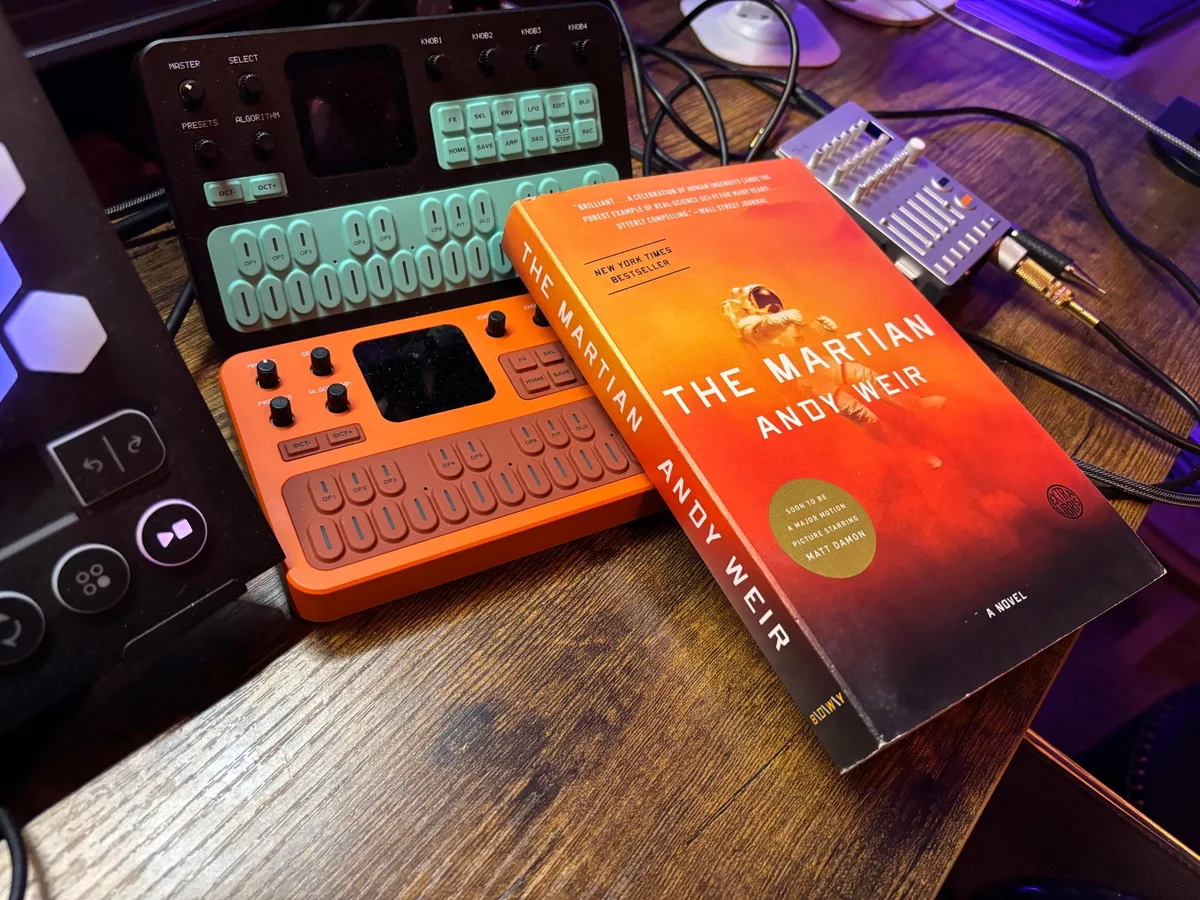
The next experiment goes further. This time, the studio closes almost completely. You may use four instruments, and each instrument gets one preset or core sound. Once the project begins, those four sounds cannot be replaced. You may use one reverb and one delay, along with ordinary corrective tools such as EQ and compression where necessary, but there is no sample browsing, no alternate synth patch, no additional instrument introduced because the arrangement feels empty, and no downloading a new plugin halfway through the composition because you suddenly decide that the track really needs some obscure Soviet string machine.
For purposes of this experiment, a conventional drum kit counts as one instrument. A kick drum, snare, hi-hat, and cymbals can all belong to that single drum instrument rather than consuming four separate slots. The point is not to make percussion artificially impossible. The point is to keep the number of distinct instrumental systems small. If your drum instrument also includes toms or a few related percussion pieces, that is fine, provided they belong to the same coherent kit rather than becoming an excuse to smuggle an entire sample library into the project.
Four instruments. Four basic sound sources. Now write the record.
The closed-studio rule
A practical version of the experiment might work like this. Choose four instruments before composing anything. Select one preset or starting sound from each instrument and commit to those choices. Limit yourself to a maximum of sixteen musical tracks, or fewer if you want the experiment to become more severe. Use one shared reverb and one shared delay. Do not add new samples, instruments, or presets after composition begins. Before deleting or replacing a musical idea, revise it at least three times. Finally, give yourself a fixed period in which the piece must be completed.
That last rule matters more than it may initially appear. Restrictions are most useful when they produce commitment. Without some kind of deadline, even a restricted project can become another endlessly revisable object sitting on a hard drive. The purpose is not merely to reduce choices. It is to force those choices to accumulate until the music becomes something definite. This is a closed system, and whatever the track needs must somehow emerge from what is already inside it.
Four sounds are not really four sounds
At first, the limitation seems severe. A bass sound is a bass sound. A piano is a piano. A synthesizer patch is whatever the preset designer made it. But this way of thinking reveals how accustomed we have become to treating sounds as finished products rather than as instruments with ranges of possible behavior.
Consider a single synthesizer patch. Played softly in the lower register, it may function as a bass. Move it upward, shorten the envelope, and play repeated sixteenth notes, and it may become a rhythmic element. Stretch the notes and automate the filter, and it can become a pad. Play isolated notes through delay and suddenly it functions as punctuation. The preset has not changed, but its role has.
The same principle applies to acoustic and sampled instruments. A piano can provide chords, bass notes, percussion, ostinatos, melodies, clusters, rhythmic accents, and resonant washes. A drum instrument can create far more than a conventional kick-snare-hi-hat groove if its elements are tuned, rearranged, muted, velocity-shaped, or used sparsely. Once replacement is prohibited, transformation becomes interesting. That is exactly what the exercise is designed to provoke.
Arrangement has to solve the problem
One of the easiest ways to disguise an arrangement problem is to add another sound. The chorus feels weak, so we add a pad. The second verse feels empty, so we introduce a new percussion loop. The bridge does not feel different enough, so we load another synthesizer. Eventually the composition may contain thirty or forty tracks, many of which exist primarily because something earlier in the arrangement was never made to work properly.
The closed-studio approach removes that escape route. If only four instruments exist, contrast has to come from somewhere else. Perhaps the chorus becomes larger because the bass moves into a different register. Perhaps the drums become half-time. Perhaps one instrument disappears entirely during the verse so that its return feels significant. Perhaps the melody migrates from one sound to another, or one instrument takes on a new rhythmic role in the second half of the piece.
These are compositional solutions rather than inventory solutions. In many cases, they are stronger. Listeners rarely experience a song as a list of plugins. They experience movement, expectation, density, rhythm, repetition, surprise, tension, release, and timbral contrast. Those things can often be created without introducing anything new. The challenge is learning how.
One preset means you have to learn the instrument
The one-preset rule may be the most important part of the experiment. Three presets per instrument still permit comparison. One preset eliminates it. Once the sound is chosen, browsing ends.
This creates a relationship musicians have historically had with physical instruments but often do not have with software. A guitarist learns what happens when he attacks the string near the bridge. A drummer learns the difference between the center and edge of the snare. A pianist discovers the character of the instrument at different velocities and registers. Software instruments contain similar relationships, but preset culture can hide them.
If a patch sounds dull, we tend to select another patch rather than discover how the existing one responds to velocity, register, articulation, modulation, automation, sustain, or note density. The one-preset rule forces investigation. You begin learning the sound’s weak areas and strong areas. You discover where it becomes harsh, where it disappears, where it begins interacting beautifully with another instrument, and where two notes sound better than five.
Eventually, that preset stops feeling like something you found. It becomes something you know.
The ban on rescue tracks
There is another rule worth adding: no rescue tracks. A rescue track is any new part whose main purpose is to fix something that should probably have been corrected elsewhere.
The bass lacks weight, so another bass is added beneath it. The chorus lacks excitement, so another synth plays the same chords an octave higher. The snare lacks impact, so three more snares are layered underneath it. Sometimes these techniques are completely legitimate. Layering is part of modern production and can produce extraordinary results. But during this exercise, layering becomes suspicious.
Ask what the additional track is actually solving. If the bass lacks weight, perhaps the arrangement leaves no room for its fundamental. If the snare sounds weak, perhaps the kick, bass, guitars, and keyboards are all competing with its transient. If the chorus does not feel larger, perhaps the verse is already too dense. The restriction forces you to investigate causes rather than continually treating symptoms.
The drum-kit exception does not change this principle. A kick, snare, hi-hat, and cymbals may count collectively as one instrument, but that does not mean every weak drum sound should be reinforced with three hidden layers. The goal is still to make the chosen instrument work through performance, arrangement, tuning, velocity, balance, and processing before resorting to accumulation.
One reverb, one room
The effects limitation adds another useful pressure. Choose one primary reverb and imagine that every instrument exists in the same fictional acoustic environment. This does not mean every send level must be identical. Some parts may be nearly dry while others are heavily reverberant. The shared space simply helps establish coherence and prevents the mix from becoming a collection of unrelated environments.
The same is true of delay. One delay device can produce slapback, rhythmic echoes, diffusion-like ambience, repeating patterns, stereo motion, and transitional effects if used creatively. Restricting yourself to a single delay encourages you to learn it deeply rather than cycling through half a dozen specialized plugins.
Again, the point is not asceticism for its own sake. The point is familiarity. Creative speed often increases when tools become predictable.
Freeze decisions earlier
There is an even harsher version of this experiment. Once a section is working, print it. Render the instrument to audio, disable the original MIDI track, and move on.
This introduces another layer of commitment because MIDI encourages perpetual revision. Every note remains editable. Every velocity remains negotiable. Every patch parameter remains available. Audio behaves differently psychologically. Once something has been rendered, it begins to feel like material rather than possibility.
You can still cut it, process it, rearrange it, or replace it if absolutely necessary, but the default assumption changes. The performance now exists. Older recording methods imposed this kind of commitment naturally. Modern DAWs remove almost all of it, so there can be value in deliberately putting some of that friction back.
The three-pass rule
To make the Kaizen aspect explicit, apply a three-pass rule whenever something is not working. Do not immediately delete it. Instead, improve it three times.
Suppose the bassline feels wrong. First, alter the rhythm and listen again. Second, change the note lengths or register and listen again. Third, change its relationship to the kick or surrounding harmony. Only after those attempts should you conclude that the original concept itself may be wrong.
This forces each revision to contain information from the previous one. That is a small but important distinction. Random experimentation is not necessarily iteration. Iteration occurs when the next version responds to something learned from the last version.
The same process can be applied everywhere. If the melody is weak, rewrite it three times. If the transition into the chorus is awkward, try three structural solutions. If the mix feels crowded, remove or redistribute elements three times before reaching for another processor. Each failure becomes diagnostic rather than merely disappointing.
Reduce the track count, too
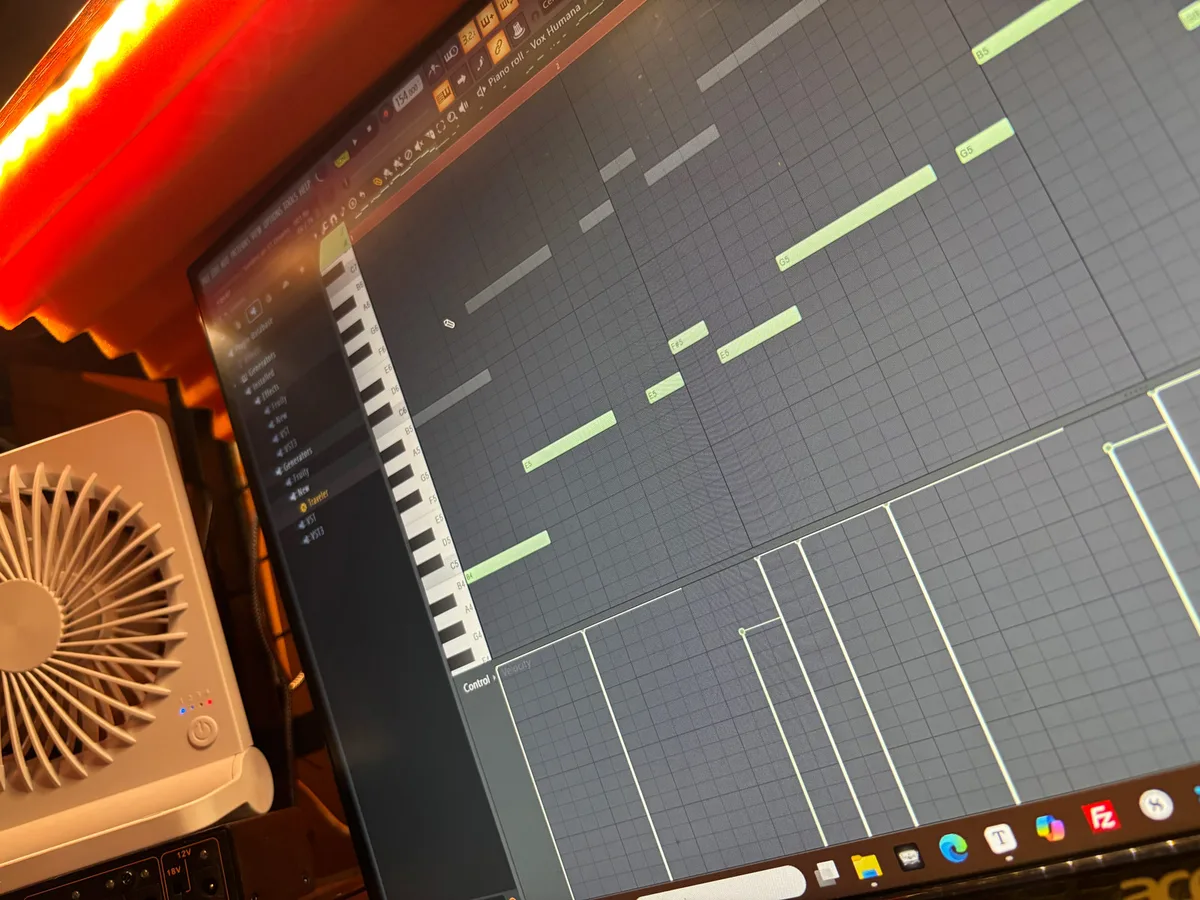
Four instruments can still become an enormous project if every articulation and overdub receives its own channel, so it helps to impose a hard track-count limit as well. Sixteen tracks is relatively generous. Eight is more interesting. Four is brutal.
A track limit forces another kind of decision because parts must begin sharing space and responsibility. One instrument may handle both bass and occasional melodic figures. A percussion instrument may carry rhythmic accents that would normally be spread across several layers. A synthesizer may change role entirely between sections.
These role changes can make arrangements feel more alive because instruments stop behaving like permanent employees with fixed job descriptions. They enter when needed, disappear when they are not needed, and sometimes return doing something completely different.
Do not fill every empty space
Severe limitations also reveal how often we confuse emptiness with incompleteness. When only four instruments exist, there will inevitably be moments in which fewer things are happening. Leave some of them alone.
Silence is one of the few resources that does not need a plugin. An empty beat before a chorus can create more impact than another riser. A verse with only two active instruments can make the following section sound enormous without adding anything. Removing the bass for four bars may create more anticipation than introducing another layer.
Limited arrangements encourage negative space because there are fewer objects available to fill it. That can be an advantage rather than a deficiency.
Try the two-instrument version
Once four instruments begin to feel comfortable, cut the number in half. Use two instruments, with one preset each. Perhaps one provides the rhythmic foundation while the other supplies pitched material, or perhaps both instruments are required to do everything.
At that point, the exercise begins to resemble orchestration at a microscopic scale. Every octave matters. Every articulation matters. Every entrance becomes noticeable. There is almost nowhere for weak writing to hide, which is exactly what makes the exercise useful.
The purpose is not necessarily to release the resulting track. The exercise functions more like a drawing study for a visual artist or a technical exercise for a pianist. It isolates certain creative muscles and removes the usual compensations. A musician who can make two sounds interesting for four minutes will probably make better decisions when twenty sounds are available.

The final version: one instrument
Eventually there is nowhere else to go. Choose one instrument, choose one preset, and write an entire piece.
Do not change the preset. Do not layer another patch underneath it. Instead, exploit register, rhythm, velocity, articulation, automation, harmony, silence, dynamics, and effects. Make the bass from it. Make the harmony from it. Make the melody from it. Make the strange sound that happens once at two minutes and seventeen seconds from it.
If that instrument is a drum kit, then the kick, snare, hi-hat, toms, and cymbals can still operate as a single unified instrumental system. If it is a synthesizer, then every musical role must emerge from the same patch. The exact challenge will differ depending on the instrument chosen, but the underlying question remains the same: how much variety can be extracted from one source?
At this point, the exercise is no longer really about limitation. It is about discovering how much information can be drawn from a single instrument when replacement is no longer available.
That is a useful creative question because modern production culture often teaches the opposite lesson. We are encouraged to accumulate more plugins, more samples, more tracks, and more options. But accumulation and development are not the same thing. Sometimes a composition becomes more interesting when nothing new is permitted to enter.
Close the door
The modern studio has no natural boundary. You can always add another track. You can always download another instrument. You can always audition another preset. You can always reopen yesterday’s decision. That freedom is extraordinary, but it can also prevent the moment when possibility becomes music.
So impose the boundary yourself. Four instruments. One preset each. A drum kit counts as one instrument. One reverb. One delay. A fixed track count. A three-pass revision rule. A deadline.
Once the doors close, stop asking what else you could add. Ask what more you can discover in what you already have.
That question may lead somewhere far more interesting. Pour yourself a glass of wine and share that track with someone whose opinion matters to you.